
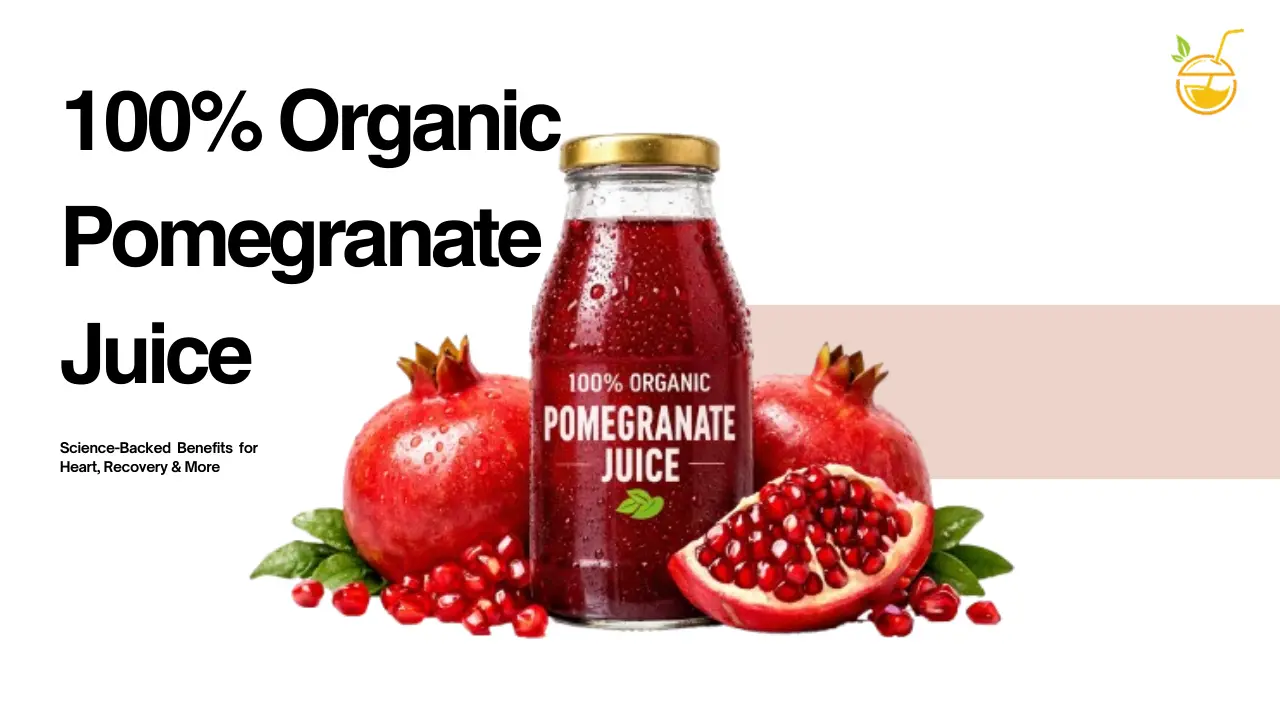
Quick take
- Heart help: Multiple randomized-trial meta-analyses link pomegranate juice with meaningful drops in systolic and diastolic blood pressure.
- Antioxidant power: Rich in polyphenols (ellagitannins/punicalagin) that drive most of its antioxidant capacity.
- Workout ally: Studies report better time-to-exhaustion and faster strength recovery when regularly consumed.
- Label matters: “100% juice” has a legal definition, and “USDA Organic” restricts synthetic pesticides.
What “100% organic pomegranate juice” actually means
- “100% juice”: U.S. regulations require the label to state the actual percent juice; 100% means the contents are entirely fruit/veg juice (single or blended). If it’s from concentrate, you’ll see that disclosed. No added sugars are allowed beyond what’s naturally present in single-strength juice.
- “USDA Organic”: Grown and processed to strict federal standards that rely on natural inputs and prohibit most synthetic pesticides and fertilizers.
Nutrition snapshot (8 fl oz / ~240 mL)
Roughly ~130–135 calories with ~31 g natural sugar and minimal protein/fat. That’s typical for 100% pomegranate juice (not a juice “drink”).
Benefits backed by research
1) Heart & blood-pressure support
Across randomized trials, pomegranate juice lowered systolic BP by ~5–8 mmHg and diastolic by ~2–3 mmHg, with effects seen over weeks at doses ranging from ~50–330 mL/day.
2) Antioxidants that actually do work
Pomegranate’s standout compounds—punicalagin and other ellagitannins—account for the majority of its antioxidant capacity and have anti-inflammatory activity in lab and human studies.
3) Better training days
Trials in athletes show improved time-to-exhaustion and faster recovery after intense exercise when pomegranate extract/juice is taken consistently (polyphenol-rich versions work best).
4) Brain & healthy aging (early signals)
Emerging work around punicalagin suggests potential for cognitive support; evidence is early and still building.
How much and when?
Most studies use ~50–330 mL (2–11 oz) daily for several weeks. If you’re watching sugars, start with 4–6 oz alongside a meal or post-workout.
Who should be cautious
- On blood thinners or certain meds? Case reports and expert groups flag possible interactions (e.g., warfarin; statins discussed with mixed findings). Check with your clinician before daily use.
- Managing blood sugar? It’s still fruit sugar. Keep portions moderate and pair with food. (See nutrition snapshot above.)
How to pick a great bottle (and what we do at Sol Good Juice)
- Look for “100% pomegranate juice” on the label (not “juice cocktail” or “drink”).
- Prefer USDA Organic to reduce exposure to synthetic pesticides.
- Check that it’s not from a sugar-added blend; ingredient list should be short and clear.
At Sol Good Juice, our focus is simple: real fruit, clean labels. If you’re after pomegranate, ask for our 100% organic pomegranate juice—straightforward, bold, and made for daily sips.
FAQs
Is organic pomegranate juice “healthier” than conventional?
Organic limits synthetic pesticides; the polyphenols you care about are native to the fruit either way. Many shoppers choose organic for farming and residue reasons.
Can I drink it every day?
Daily is common in studies. Keep portions reasonable (think 4–8 oz) and account for the sugars within your overall diet or training plan.
What about blends labeled “100% juice”?
Legal “100% juice” can be a blend of several juices; if you want all-pomegranate, the ingredient list should match.
Simple recipe ideas
- Post-workout cooler: 4 oz pomegranate juice + cold water + pinch of salt + squeeze of lime.
- Breakfast mix-in: 3–4 oz pomegranate + plain yogurt + chia.
- Evening spritz: 3 oz pomegranate + sparkling water + mint.
General info only; not medical advice. If you take prescription meds—especially anticoagulants—talk to your clinician before making it a daily habit.


 2026 Powered by