
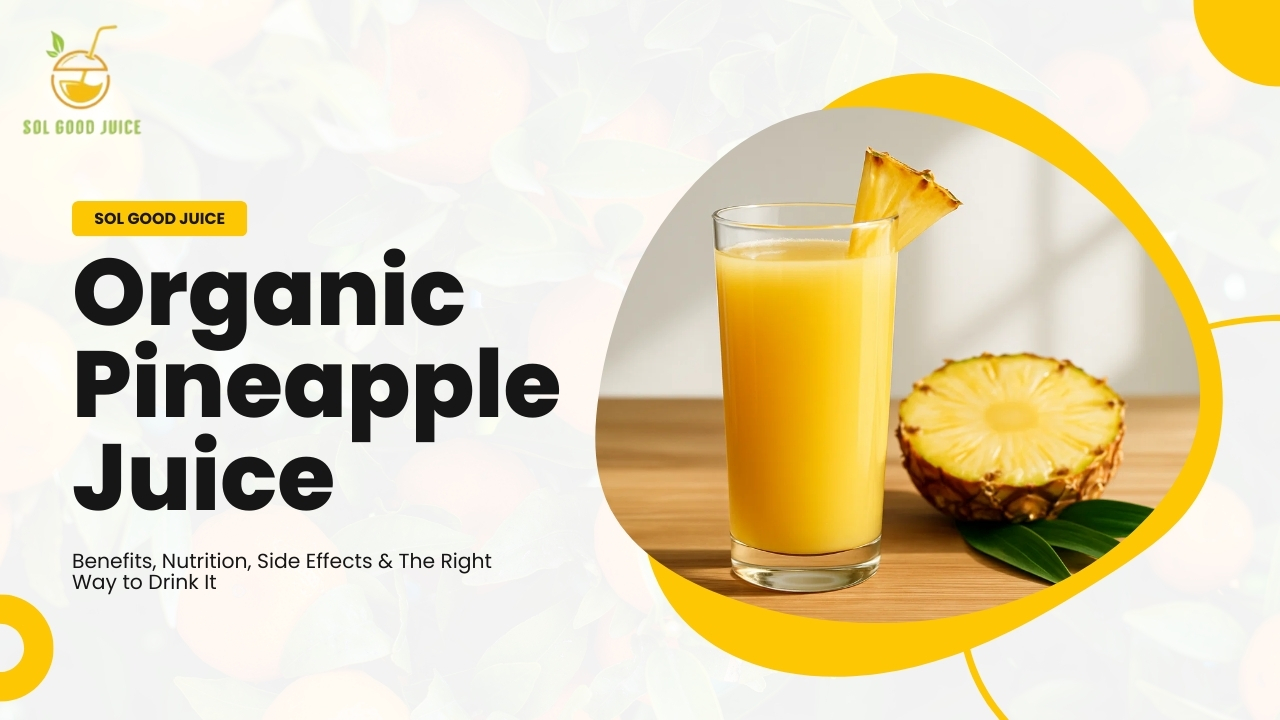
Pineapple juice isn’t just bright and tropical—it’s a concentrated source of vitamin C, manganese, antioxidants, and the enzyme bromelain. If you choose 100% organic pineapple juice (no added sugar), it can fit well into a healthy routine. Below you’ll find evidence-based benefits, exact nutrition, cautions, and smart ways to add it to your day.
Quick take
- Yes, it can be good for you—mainly for immune support (vitamin C), antioxidant protection, and digestion (bromelain).
- Go organic to reduce pesticide exposure; nutrition is broadly similar to conventional.
- Watch portion size (natural sugars) and medication interactions related to bromelain.
Nutrition facts (1 cup / 250 g, 100% pineapple juice, unsweetened)
- Calories: ~133
- Vitamin C: ~109 mg (120% DV)
- Potassium: ~325 mg (7% DV)
- Sugar: ~25 g (naturally occurring)
- Fiber: ~0.5 g
- Protein: ~0.9 g
Data source: MyFoodData (USDA-based).
Whole pineapple has more fiber than juice, so alternate juice with fresh fruit to keep fiber intake up.
Science-backed benefits
1) Immune support & antioxidant protection
The high vitamin C content supports normal immune function and collagen formation; manganese and other antioxidants help counter oxidative stress.
2) Digestive comfort from bromelain
Bromelain, a proteolytic enzyme naturally present in pineapple, helps break down proteins and is studied for digestive support and anti-inflammatory actions. Evidence ranges from cell and animal studies to small human trials; promising but not definitive.
3) Inflammation markers (emerging area)
Bromelain has been investigated for modulating inflammatory pathways; research is mixed and still developing. It should be viewed as supportive, not a stand-alone treatment.
4) Heart-smart hydration
Pineapple juice provides potassium and polyphenols that align with general heart-healthy patterns when consumed in moderate amounts and without added sugars.
Organic vs. conventional: what really changes?
- Lower pesticide residue exposure with organic choices; this is the clearest advantage supported by reviews and major clinics. Nutrient differences are generally small.
Possible downsides & who should be careful
- Sugar load: Even unsweetened juice is concentrated. Stick to 120–240 ml (½–1 cup) in a sitting, especially if you’re managing blood sugar.
- Medication interactions: Bromelain may increase bleeding risk when combined with anticoagulants/antiplatelets (e.g., warfarin, aspirin) or certain herbs/supplements. Consult your clinician.
- Mouth irritation & reflux: Acidity and bromelain can cause tingling/irritation in the mouth or worsen heartburn in sensitive folks. (General clinical guidance; also reflected in consumer health sources.)
- Allergy/latex-fruit syndrome: If you’re allergic to pineapple or sensitive to bromelain, avoid the juice.
How much and when to drink
- Smart serving: Aim for ½–1 cup at a time. Pair with protein/fat (e.g., yogurt, nuts) to blunt a rapid blood-sugar rise.
- Better moments:
- With meals or post-workout for hydration, carbs, and vitamin C.
- Not ideal right before brushing—acids can soften enamel; give it some time. (General dental guidance applies across acidic juices.)
How to choose a good bottle (and what “organic” should say)
- Label to look for: “100% juice,” “no added sugar,” and organic certification (e.g., USDA Organic).
- Skip juice drinks/nectars with added sugars or flavorings.
- Cold-pressed or not-from-concentrate options preserve fresh flavor; nutrition is broadly comparable if both are 100% juice.
DIY organic pineapple juice (more fiber-friendly)
Blend organic pineapple chunks with cold water (or coconut water) and a pinch of salt; strain lightly or not at all to keep more fiber. Add mint/ginger for flavor.
FAQs
Is organic pineapple juice healthier than conventional?
Nutritionally, they’re similar; organic reduces pesticide residue exposure, which many consumers prefer.
Does pineapple juice help digestion?
It may help break down proteins due to bromelain. Evidence is supportive but not conclusive; it’s best seen as one helpful piece of an overall balanced diet.
How much is too much?
Regularly drinking multiple cups can push sugar intake high. Keep portions modest and prioritize whole fruit for fiber.
Conclusion
Drinking organic pineapple juice can be good for you—mainly for vitamin C, antioxidants, hydration, and a possible digestion assist from bromelain—when you keep portions small and choose 100% organic with no added sugar. If you’re on blood-thinners or have reflux/allergies, check with your clinician first.


 2026 Powered by